



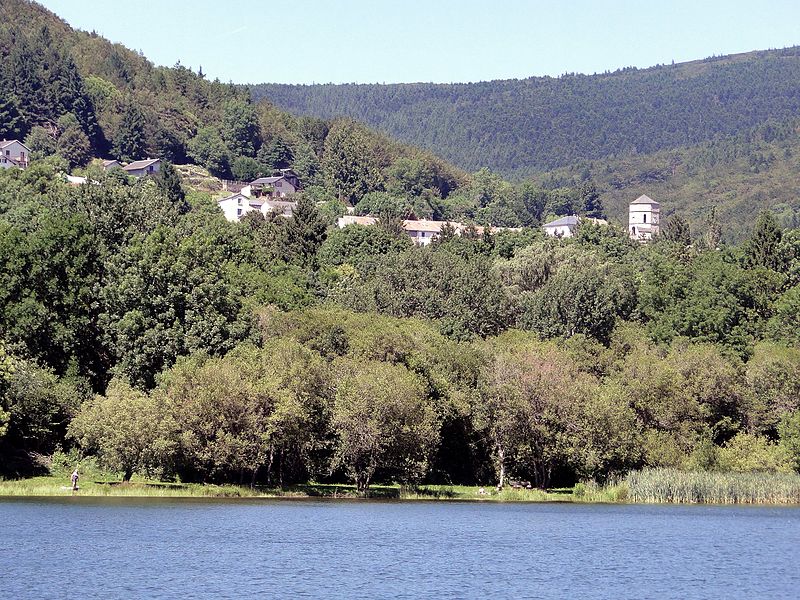
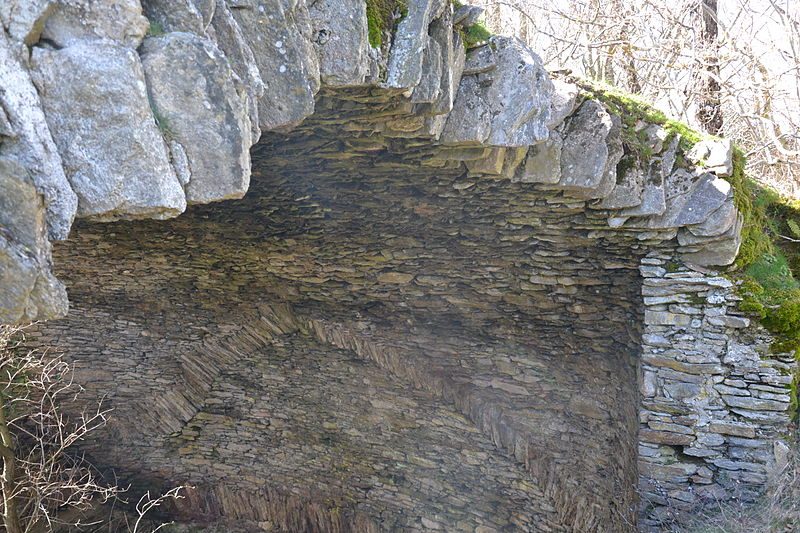
The village of Pradelles-Cabardès lies at the foot of Pic de Nore, the 1211-meter-high peak of the Montagne Noire. For a long time, until the mid-19th century, the town’s climatic characteristics enabled its inhabitants to develop ice cream production for the entire region.
We poured the snowdrifts into circular moulds before compacting it to make to form a compact block, then covered it to a height of 1 metre with beech leaves are rot-proof.
In summer, when ice was essential for preservation, the cooler was opened to extract the ice blocks, which were then placed on the “bourra” (a piece of jute cloth), also lined with beech leaves. Then the whole thing was sewn together to make the ice-loaf airtight before delivering it or putting it back in the ice-box for delivery, which was done at night by cart.
Whoever The first to come up with the idea for this business was Pierre Piquemol in 1849. He was soon imitated by many inhabitants, and the development of this industry became prosperous. The ice loaves reached the narbonnais country, the country carcassonnais and the Mazamet and Castres region. As the rail moves forward, the ice on the Pradelles was delivered to major cities in the southwest.
This activity flourished, but fell apart during the First World War, when the Horses and men were requisitioned, and the operation came to a definitive halt in 1927.
Today, the The icehouses have been listed as historic monuments since 1986.
Several signposted circuits have been laid out around Pradelles-Cabardès, some of them go through the coolers.
Finally, don’t miss not the 14th-century Saint-Jean-Baptiste church. Original architecture is composed of a five-sided apse, a four-sided nave bays and six side chapels. Its bell tower is octagonal.
A great day out during your stay at camping Le martinet rouge. You can picnic in the special picnic area around Lac de Pradelles.
Photo credits: [[File:Lac de Pradelles, Aude (5).jpg|Lac de Pradelles, Aude (5)]]
METGE Jean [CC BY-SA 4.0 (https://creativecommons.org/licenses/by-sa/4.0)]
https://commons.wikimedia.org/wiki/File:Pradelles-glaci%C3%A8re1.jpg
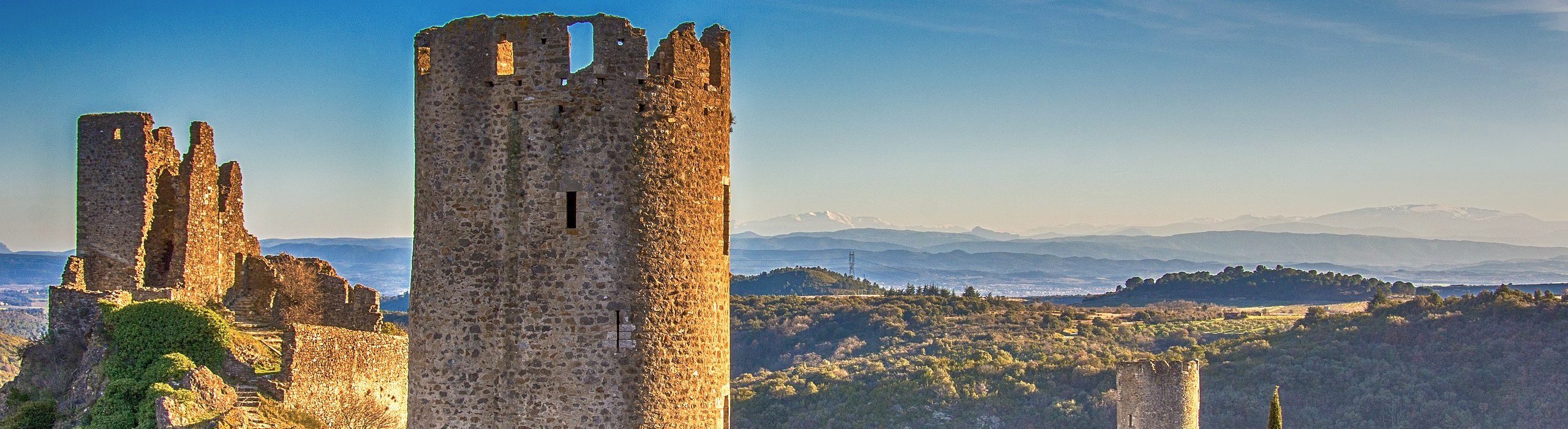
Lastours and its four Cathar castles
Lastours, a major site in the Pays Cathare, was the main lock of the Cabardès region. It’s close to Carcassonne, just 20 km from your campsite.
This exceptionally rich archaeological site features 4 castles built on a rocky spur 300 m above sea level: Cabaret, Tour Régine, Surdespine and Quertineux. These buildings have been constructed according to the structure of the rocks and are not connected to each other.
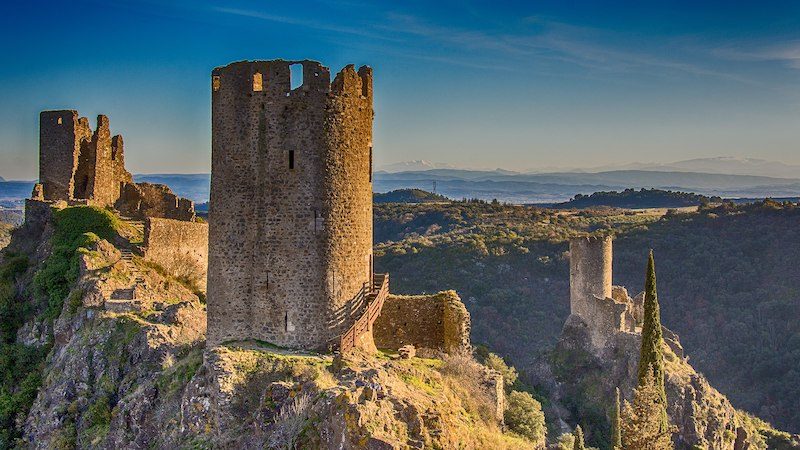
They dominate the village, which stretches out on the hillsides along the Orbiel river, while the medieval village of Castrum de Cabaret nestles at the foot of the citadels, in the hollow of the valley.
This medieval treasure was unearthed during archaeological excavations, bringing it out of oblivion and bringing back to life the time of the Albigensian Crusade, a disastrous page in the history of Cathar country.
Indeed, the lords of Cabaret were linked to Catharism and were attacked by Simon de Montfort, leader of the royal armies. After the defeat of the Cathars in 1229, the castles were rebuilt as royal fortresses.
During your visit, you can see “Lastours, 4000 years of history”, the archaeological exhibition featuring 25 years of archaeological excavations.
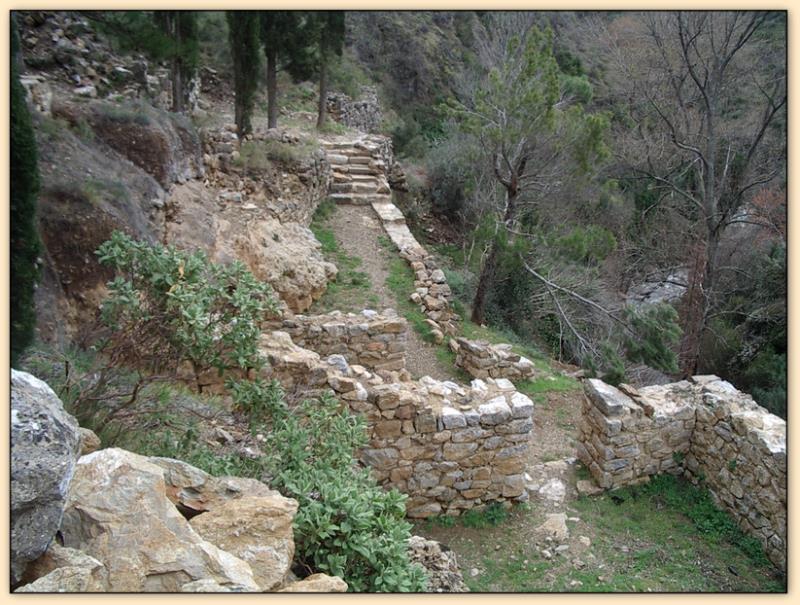
Château de Cabaret has been restored. A team of stonemasons and masons specializing in historic monuments worked on the tower of the Château de Cabaret. The walls were repaired, the stones cleaned and brushed to restore the monument to its former glory. The tour of the Lastours site is divided into two parts:
First of all, the belvedere, which offers a breathtaking view of the Montagne Noire, the ancient mines of Barrenc and, of course, the historic complex of the four citadels of Lastours.
Then the ascent to the châteaux along a specially prepared path that starts at the old textile mill.
This walk will also be an opportunity to discover a “fauna and flora” trail, which accompanies visitors and informs them about the site’s natural environment.
If you love history, geology and botany, Lastours is the place to be during your stay at vote camping. Book your accommodation
INFORMATION:
22 route des 4 châteaux,
11600 LASTOURS
Tel. +33 4 68 77 56 02
campsite near Lastours
Castelnaudary in the Aude department
The famous city of cassoulet is just 38km from your campsite in the Aude. In addition to this gastronomic stopover, the town has many surprises in store for its visitors.
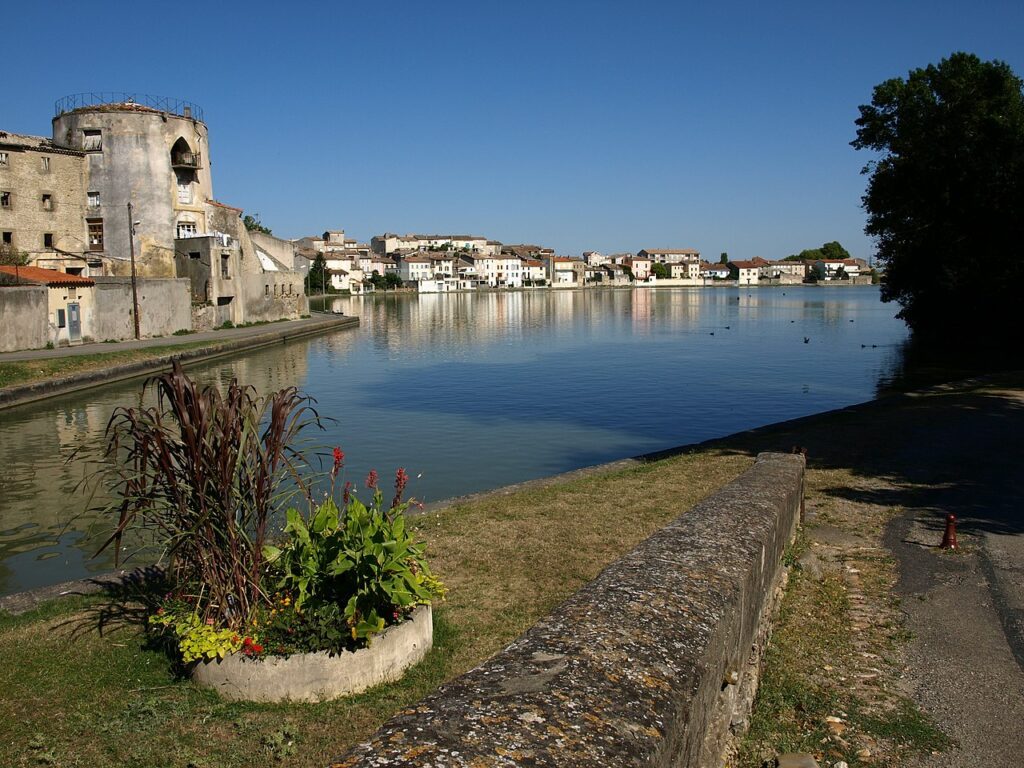
With the midi canal running through it, Castelnaudary, a fortified medieval town close to Carcassonne, is a pleasant place to take a stroll and discover its rich heritage.
Built around the “ Castellum Novum Arri” (now the Musée de Lauragais), the town was the cradle of Catharism, and became a target for crusader leader Simon de Montfort, who saw the conquest of Castelnaudary as a means of weakening the Count of Toulouse, a fervent defender of the Cathar faith. He took the town and had to endure a siege by the Count of Toulouse, who had come to retake the city. It was a failure for the troops of the Count of Toulouse, but was retaken in 1221 by the Count before Catharism finally collapsed with the capture of Montségur.
During the Hundred Years’ War, the town was destroyed by the Black Prince, son of the King of England. It wasn’t until the reign of Henri II, and especially his wife Catherine de Médicis, that the Cathar province once again became an important center. In fact, it is a powerful city, concentrating administrative and judicial powers. She erected the Présidial, a civil and criminal court, which led to the installation of numerous magistrates in the town.
In the 17th century, the town experienced an episode of the Fronde, but in this century of great change, Castelnaudary welcomed the construction of the royal canal that crossed the Languedoc region. This would become the famous Canal du Midi, visited by thousands of people. The panorama of the city is breathtaking: from the little port, across the Pont Vieux, the Grand Bassin opens up, leading to the Pont Saint Roch and finally to the locks.
A historic town in the Aude department
You’ll discover many relics of the town’s glorious past as you stroll through the old town: the impasse des Boutiquiers, the former Carmes convent, private mansions and the Grand Bazar in the town hall…
On the large Place de Verdun, a beautiful covered market stands witness to the town’s transformation into a bastide town in the 14th century. Today, restored, it offers a peaceful setting around its fountain and plane trees, while being very lively thanks to the many stores that have replaced the boutiques of the herbal market…
Continue your tour with a visit to the church of Saint Michel, originally a Romanesque fortress temple, now an imposing Gothic edifice, with nine side chapels and a high pyramidal spire rising to 50 m. The bell tower boasts a 35-bell carillon, one of the largest in France. Inside, the beautiful, listed organs date back to the 18th century.
On your way out, admire the ten exceptionally well-crafted Passion of Christ panels in the small Notre Dame de Pitié chapel.
Castelnaudary, the world city of cassoulet
Finally, don’t miss the opportunity to taste the famous cassoulet… which, according to legend, was invented during a siege and was initially made with beans and meat, to give the fighters back their strength, who were in fact victorious. beans having replaced broad beans in the 16th c.
Discover here the real recipe of Cassoulet de Castelnaudary
On the last weekend of August, the town pays tribute to its favorite dish with the great cassoulet festival.
It’s a popular family event with free music and tastings all day long…
Many reasons to spend a day in Castelnaudary during your stay at “le Martinet” campsite.
Click here to book your cottage or camping pitch.
ARAGON in Cabardes
Your campsite near Aragon. Just 8 km from your campsite in the Aude, Aragon is a visit not to be missed.
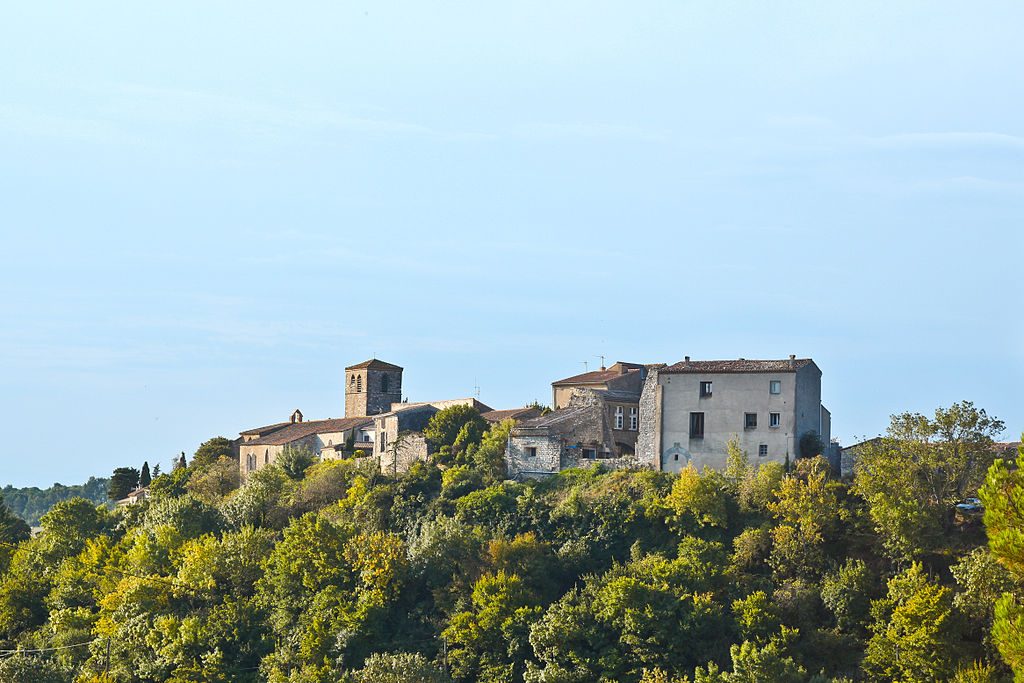
From the top of its rocky outcrop, this small village overlooks the Trapel and Valette streams, harboring vestiges of its medieval past. In addition to its charming little streets, Aragon boasts a late 16th-century castle that once belonged to the Lords of Aragon, but because of their support for the Cathar cause, they were dispossessed of their domains by the King of France.
It has been transformed over the centuries and now boasts a number of fine features. Of the original medieval building, only one section of wall is still visible, but it blends in with the rest of the facades. It features a 16th-century door.
This elegant building is privately owned but beautifully restored, with beautiful mullioned windows, and is well worth a visit in the heart of the old village.
Aragon also owes its fame to the 14th-century painted woodwork in the church of Sainte Marie, recently discovered when the church was refurbished. What a surprise it was for the craftsmen when they removed the false cross-beams that had been installed in the 19th century, obscuring the roof structure: they discovered painted frescoes whose fresh colors had been exceptionally well preserved. These paintings, with their traditional medieval decorations: bestiaries, coats of arms and plant motifs, were uncovered.
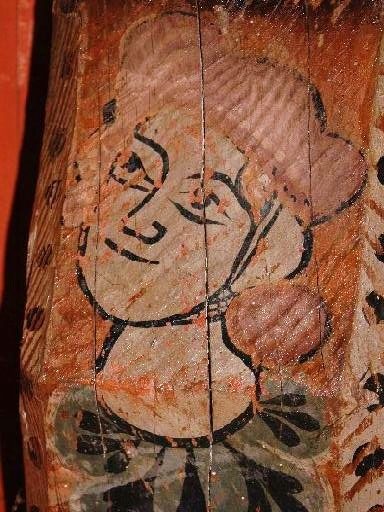
The southern Gothic church of Sainte Marie is set among the houses of theold castrum, and still has a door dating back to the time of its construction (the bell tower door).
In the center of the village stands a 16th-century stone cross, decorated on both sides. On the same square, known as Place de l’abreuvoir, you can see a granite drinking trough with the charm of yesteryear.
Finally, the remains of two mills bear witness to Aragon’s rural past.
The dry-stone area
It’s an interpretive museum showcasing ancestral dry-stone building techniques, one of the region’s living heritages. Guided by a film, visitors can follow the evolution of buildings (terraces, huts, walls, etc.) through the economy of the area.
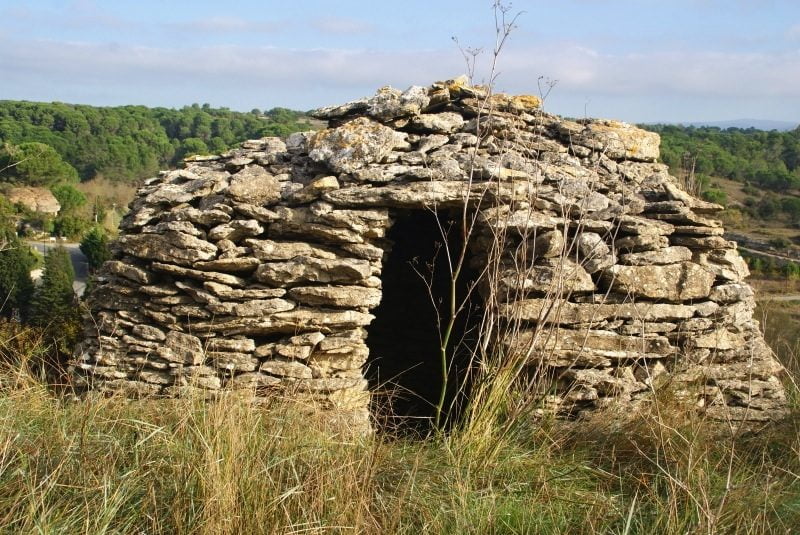
In this particular garden, you can admire discoidal stelae, funerary monuments dedicated to Christians, which probably originated in the ancient cemetery. Replicas have been installed in the garden (11). A medieval garden, modelled on those found near abbeys and castles, has also been laid out on rue du Paro. In these gardens, plants were grown for a variety of purposes: medicinal, dietary, utilitarian (from which dyes or fibers were extracted) and liturgical (used for rituals).
Aragon promises a pleasant visit, a journey back to medieval times, but also the discovery of “dry stone” landscapes, shaped by man over the centuries.
Book your camping pitch near Aragon – Book your vacation accommodation in Aude
camping near Aragon en Cabardes
Photo credits: image village Aragon
Meria z Geoian [CC BY-SA 4.0 (https://creativecommons.org/licenses/by-sa/4.0)]
/Image fresco painted wood and dry stone
Campsite near Montolieu
The village of Montolieu, a village of books and the graphic arts
The Village de Montolieu is a charming village in the Aude region of Languedoc-Rousillon, just 20 minutes from the medieval city of Carcassonne.
Books are king in the village of Montolieu
Montolieu, a village of just over 800 inhabitants near the campsite, has been recognized as a village of books and graphic arts since 1989. Every year, Montolieu attracts over 52,000 visitors to discover the many booksellers, second-hand booksellers and craftspeople involved in books and the arts. Numerous galleries and exhibitions enable painters, sculptors and photographers to express themselves through their work. The Musée des Arts et des Métiers de Livre de Montolieu is a must-see when visiting the village.
Like a book, it’s sometimes hard to leave the village of Montolieu…
Visiting Montolieu also means strolling through the narrow streets of the village, taking the time to leaf through the books on display in the small bookshops or relaxing on a terrace in the charming village square.
Artists and craftsmen of Montolieu, village of books and arts
Artists and craftsmen abound in Montolieu, a village of books and graphic arts. Painters, photographers, sculptors, … like to show visitors around their studios. In Montolieu, artists and craftsmen regularly organize exhibitions for the general public. Experienced instructors introduce participants to a range of bookmaking and graphic arts techniques.
What’s more, you’ll be able to find an ideal, original gift or treat yourself even better.
List of artists and craftsmen in Montolieu .
- Calligraphy workshop
Lucile Gesta – Calligrapher
Musée du Livre et des Arts graphiques, 11170 Montolieu, 06 87 10 27 43 - Workshop – La Barbacane gallery
place de la République, 11170 Montolieu, 06 81 17 20 90
Nathalie Louveau
Painter illustrator
Mail: nathylouveau@yahoo.fr - La Forge de Montolieu
11170 Montolieu
Charles Cowen – photographer
Reports, nature, architecture, crafts, portraits, prints, framing on various supports
www.forgedemontelieu.com - Le Saint Eloi Route de Fraisse
11170 Montolieu , 04 68 79 48 15
Christian Gohay – photographer
Reports, events, weddings, portraits, reproductions, architecture, semi-aerial photos,
portable studio
www.christiangolay.com - Bertrand Taoussi – photographer
Rue Saint-André, 11170 Montolieu , 04 68 78 87 57
Fine art printing – digigraphy nature – landscape – creations – image banks – professional studio-
reports – animations – events – mobile studio
www.taoussi.com - Elsewhere, here and next door.
Nathalie Nahoum – photographer-“imageuse
Place Jean Guéhenno , 11170 Montelieu, 06 30 26 81 63
Photo walks – introduction to photography – self-publishing of photo books on the Aude – landscape – reportage – image bank
www.mi-ange-mi-demon.net - Caricature workshop ( Laurent Malard )
Route de Saint-Martin , 11170 Montelieu, 04 30 34 13 38
www.caricature-carcassonne.fr - Chris and Francis’ Workshop
Rue du 11 Novembre , 11170 Montolieu , 06 07 26 40 86
Sculptures – silver paintings-photographs – landscape
www.chrisandfrancis.com - L’Arrière cuisine
1 rue Bastlé , 11170 Montolieu , 04 68 25 29 79
Sculpture and painting workshop
Individual/group practical workshop
Mail: guillaume.sculpture@yahoo.fr - Harillo
rue du 11 Novembre 1918 , 11170 Montolieu , 04 68 79 78 31
Painting – interior decorator
www.casas-faure-cabanova.com - Carole Foissier – Art paper
23 rue de la Mairie , 11170 Montolieu , 04 68 78 09 93
Carole makes vegetable paper
Several traditional plant paper processes
Oriental processes
The pre-Hispanic process
www.carolefoissier.com - The artist’s studio “Côté Jardin” ( Geneviève Gourvil )
2 place Jean Guéhenno , 11170 Montolieu , 04 68 78 08 61
Permanent exhibition – painting – poetic art – prints
www.gouvilgenevieve.com - Figurative painter Bruno Aimetti
1 rue Saint-André , 11170 Montolieu , 06 51 37 45 58
www.aimetti.com
To visit this magnificent village, book your pitch or mobile home at Le Martinet Rouge campsite now.
Camping Montolieu, campsite near Montolieu[/vc_column_text][/vc_column][/vc_row]
Campsite near Carcassonne: stay at Camping Le Martinet Rouge (Aude)
Camping Le Martinet Rouge is one of the quietest campsites to visit Carcassonne, located 25 minutes from the medieval city, in the Montagne Noire, far from the hustle and bustle of the city. This 3-star campsite is located in Brousses-et-Villaret, in the Aude region (Occitanie), about 25 minutes from Carcassonne, in the heart of the Montagne Noire.
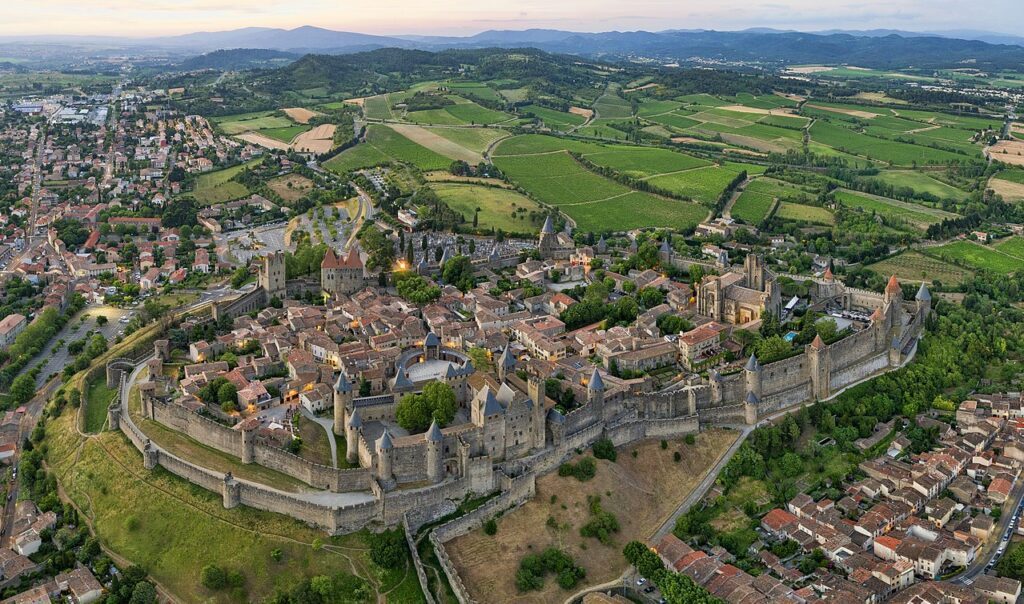
📍 Where is Camping Le Martinet Rouge located in relation to Carcassonne?
The campsite is located in the village of Brousses-et-Villaret, north of Carcassonne, in the Montagne Noire massif.
- 🚗 Travel time: about 25 minutes by car
- 📏 Distance: ~18 km
- 🌳 Environment : countryside, forest, river, absolute calm
👉 Ideal for travelers wishing to visit Carcassonne by day and relax in the quiet of the evening.
🏰 Visiting Carcassonne from the campsite
From Camping Le Martinet Rouge, you have easy access to Carcassonne’s must-see attractions:
Not to be missed
- The medieval city of Carcassonne (UNESCO)
- The Chateau Comtal
- Ramparts and towers
- Le Pont-Vieux
- The Canal du Midi
- Downtown and Bastide Saint-Louis
A visit to the Cité usually takes from half a day to a full day.
🌿 Why choose a campsite near Carcassonne rather than in town?
Stay at Camping Le Martinet Rouge and enjoy :
- the peace and quiet of the Montagne Noire
- an unspoilt natural setting
- cool nights in summer
- more space and tranquillity than in urban areas
👉 It’s an excellent compromise between cultural tourism and nature vacations.
✅ This campsite near Carcassonne is ideal for :
- visitors wishing to discover the medieval city during the day
- families seeking quiet evenings
- travelers who appreciate nature and summer coolness
- campers avoiding busy urban campsites
❌ This campsite is not suitable if you are looking for :
- an exclusively urban stay
- access on foot to the Cité de Carcassonne
- a festive campground or a lively nightlife
👨👩👧👦 A family-friendly campsite in Carcassonne
The campsite is particularly popular with families:
- outdoor pool in season
- children’s playground
- gentle summer entertainment
- friendly, family atmosphere
After a day’s sightseeing in Carcassonne, children enjoy a safe and relaxed environment.
🚶♂️ What to do around Carcassonne and the campsite?
In addition to Carcassonne, the region offers many other activities:
- hiking in the Black Mountain
- villages of the Pays Cathare
- lakes and rivers (swimming, fishing)
- local markets
- Aude wine routes
👉 The campsite is an ideal starting point for exploring the Aude.
🛏️ Accommodation to visit Carcassonne
Camping Le Martinet Rouge offers :
- pitches for tents, caravans and motorhomes
- comfortable accommodation (mobile homes, glamping depending on season)
Each accommodation allows you to stay close to Carcassonne while enjoying a natural environment.
❓ Quick FAQ – Camping and Carcassonne
Is the campsite open for visiting Carcassonne in 2026?
Yes, Camping Le Martinet Rouge is open for the 2026 tourist season. It welcomes visitors wishing to discover Carcassonne while enjoying a peaceful stay in the Montagne Noire.
How far is the campsite from the Cité de Carcassonne?
No, the Cité is about 25 minutes away by car.
Can you visit Carcassonne without sleeping there?
Yes, many holidaymakers visit Carcassonne during the day and sleep peacefully at the campsite.
Camping near Carcassonne or camping in town: which to choose?
Campsites in Carcassonne offer immediate access to the Cité, but are often busier and noisier in high season. Camping Le Martinet Rouge, 25 minutes away, makes it easy to visit Carcassonne while enjoying quiet nights, nature and warmer temperatures in summer.
Is the campsite suitable for summer?
Yes, the Montagne Noire offers more pleasant temperatures than the Carcassonne plain.
✅ Conclusion
Choosing Camping Le Martinet Rouge to visit Carcassonne means enjoying :
- the cultural richness of Carcassonne
- a quiet, natural campsite
- a balanced mix of sightseeing and relaxation