




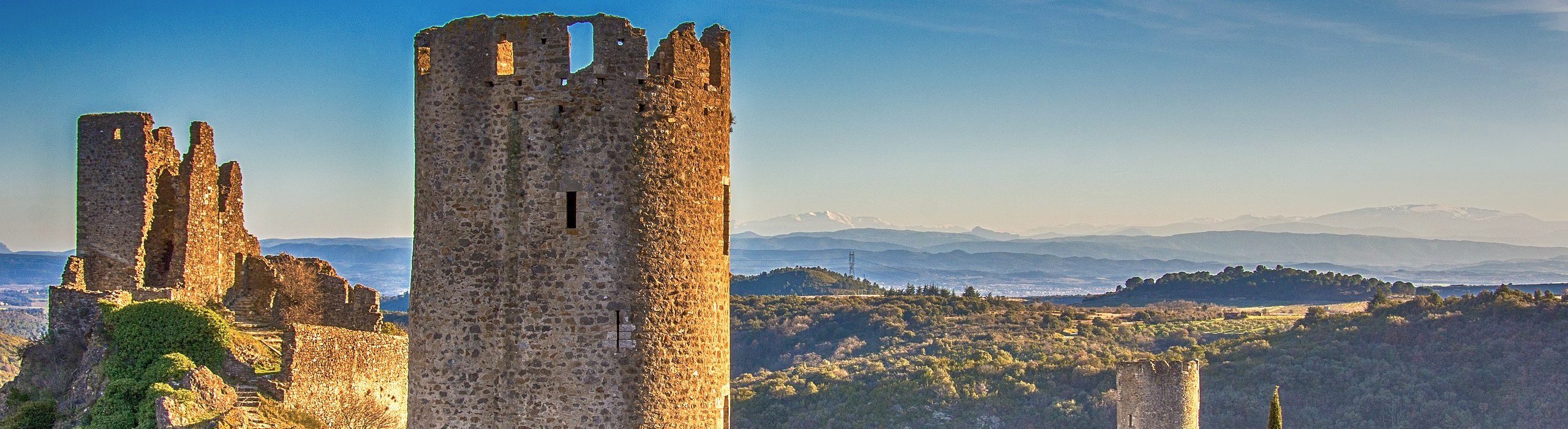
Visit Carcassonne: complete tourist guide to the medieval city
Carcassonne is one of Europe’s most emblematic fortified towns.
A UNESCO World Heritage Site, the medieval city has a fascinating ramparts, castle and exceptional history, from the Middle Ages to the present day.
This tourist guide will help you organize your visit to Carcassonne: must-see sites, ideal length of stay, recommended periods and practical advice on how to make the most of the town.
🏛️ Carcassonne, a medieval city unique in France
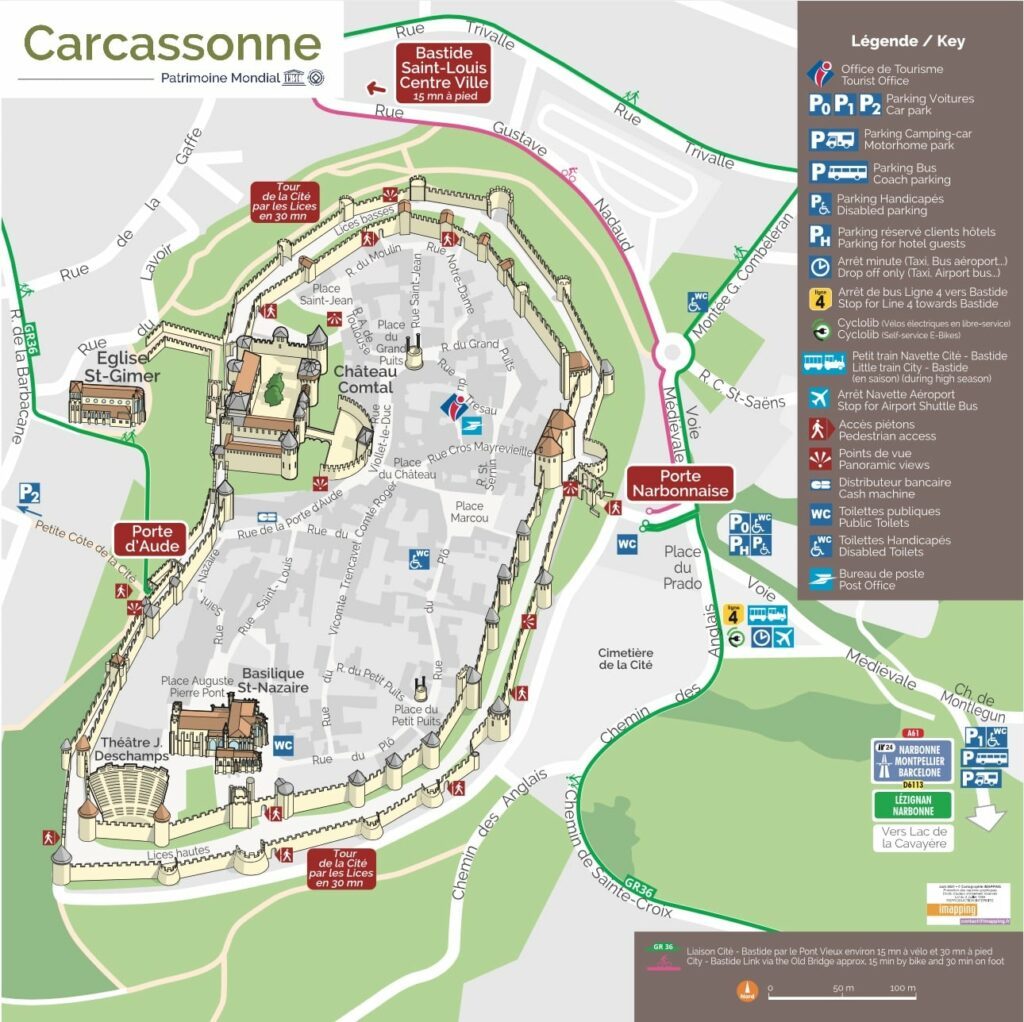
The Cité de Carcassonne is a remarkable fortified town:
- 3 km of ramparts
- 52 laps
- a perfectly preserved medieval double wall
It dominates the Aude valley and is a major example of medieval military architecture.
👑 What to visit in Carcassonne? Must-sees
🏰 The medieval city
The historic heart of Carcassonne, the medieval city is a must-see on foot.
Don’t miss :
- ramparts and lices
- the Château comtal, an ancient seigniorial fortress
- Saint-Nazaire Basilica, famous for its stained glass windows
- fortified gates and watchtowers
👉 Allow 2 to 3 hours minimum for a complete visit.
🏘️ La Bastide Saint-Louis (lower town)
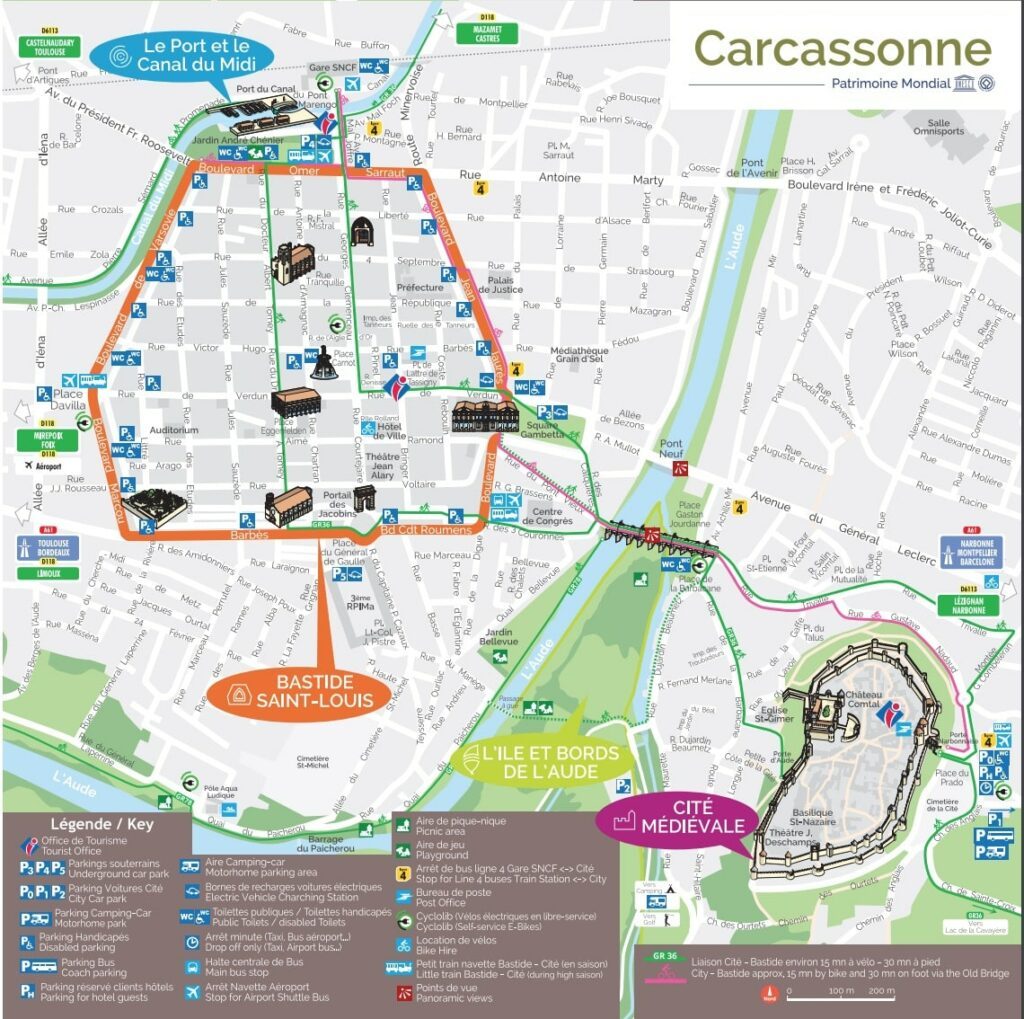
On the other side of the Aude, Bastide Saint-Louis offers a different atmosphere:
- shopping streets
- Place Carnot
- local markets
- restaurants and terraces
This is Carcassonne’s current center of life.
🚤 The Canal du Midi
Also a UNESCO World Heritage site, the Canal du Midi passes through Carcassonne.
Possible activities :
- walks and bike rides
- river cruises
- moments of relaxation in the shade of the plane trees
⏱️ How long will it take to visit Carcassonne?
- 1 day: discover the medieval city
- 2 days: Cité + Bastide + Canal du Midi
- 3 days or more: Carcassonne and surrounding area (Montagne Noire, lakes, abbeys, villages)
📅 When should you visit Carcassonne?
Carcassonne can be visited all year round, but certain periods are more pleasant:
- Spring: mild weather, moderate crowds
- Summer: very busy, very hot
- Autumn: ideal light, fewer visitors
- Winter: calmer atmosphere, quicker visits
👉 In summer, many visitors choose to stay outside the city for more coolness and tranquility.
✅ Useful tips for visiting Carcassonne
- Arrive early in the morning in high season
- Wear good shoes (cobbled floors)
- Water in summer
- Avoid the hottest hours
- Book certain tours in advance
🚗 Access and parking in Carcassonne
- Easy access by car
- Parking lots available around the Cité
- Railway station in the lower town
- Nearby Carcassonne airport
🏡 Where to stay to visit Carcassonne?
To make the most of Carcassonne, some visitors prefer to stay nearby rather than in the heart of the city, especially during the summer months.
Staying in a more natural environment allows you to :
- rest after a day of sightseeing
- avoid heat and agitation
- easy access to the surrounding area
👉 Located about 25 minutes from Carcassonne, in the Montagne Noire, the Camping Le Martinet Rouge is a popular option for visitors seeking peace, nature and freshness, while remaining close to tourist attractions.
✅ Conclusion
Carcassonne is a must-see destination for lovers of the history, heritage and landscapes of southern France.
A well-prepared visit to the medieval city will allow you to discover its rich heritage while making the most of your stay in the region.
Bonus: A little history
This strategic site has been occupied for a very long time, and Gallic tribes founded an oppidum here as early as the 6th century. The city was successively occupied by the Romans, Visigoths, Saracens and finally the Franks. During the feudal period, the Trencavel family took charge of the town until the 13th century, when it became a very important city in the Languedoc region.
With the Trencavel family protecting the Cathar religion, the town was not well regarded by Pope Innocent III, and soon became a target for Simon de Montfort, who laid siege to the town, which fell into the hands of the royal domain in 1224. Ten years under the yoke of Simon de Montfort, who set up a court of inquisition, incited the people of Carcassonne to revolt. It was severely repressed by Saint Louis, who expelled the city’s inhabitants. They settled on the other bank of the river: La Bastide Saint-Louis, and a new town was created.
The new lower town grew thanks to the textile industry and competed with the city, which lost its power over the centuries, although it retained its major military role as a defense against the kingdom of Aragon. The signing of the Treaty of the Pyrenees with Spain saw this role fall into disuse in 1659, and by the 17th century, the old town was no more than a poor, outlying district of the flourishing center of the new city, which saw its trade flourish.
From then on, the lower town took over, with the transfer of all the city’s institutions, continuing its development right up to the Revolution. But English industries were competing too fiercely with Carcassonne’s, and the cloth mills closed down as poverty gradually spread.
Carcassonne has risen from the ashes, thanks to a city miraculously preserved in the early 20th century. Awareness of the need to protect heritage began to grow, and the historic monuments departments, under the aegis of Prosper Mérimée, began to organize themselves to enhance the value of historic buildings.
The city was then in ruins and the first restoration work was launched. It took 50 years for the city of Carcassonne to regain its former majesty and 13th-century silhouette, much to the delight of the many visitors – 4 million every year – who flock to admire its ramparts.